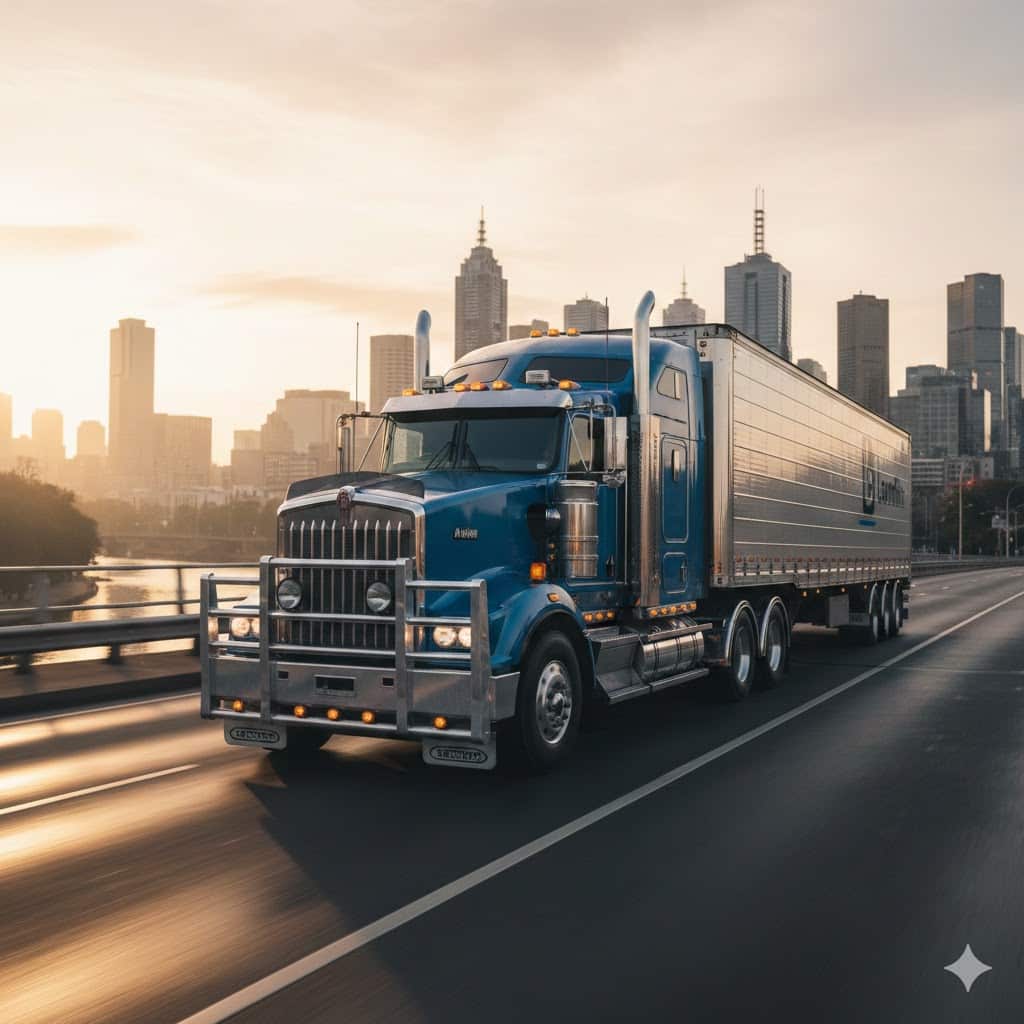
Trucks are not purchased exclusively by transport companies.
While many trucks are financed for freight, construction, earthmoving, agriculture and other commercial activities, some people purchase trucks for private purposes. This could include restoring a classic truck, towing recreational equipment, converting a truck into a motorhome or simply owning a larger vehicle for personal use.
The way you intend to use the truck can affect which lenders and finance products are available.
A truck used primarily to generate business income will generally be considered for commercial truck finance. A truck purchased primarily for private use may instead require a personal truck loan, secured vehicle loan or unsecured personal loan.
Understanding this distinction before applying can help you approach the right lenders and avoid unnecessary credit enquiries.
What Is Commercial Truck Finance?
Commercial truck finance is designed for businesses, sole traders and owner-drivers purchasing a truck for business purposes.
Common examples include trucks purchased for:
- Freight and logistics
- Civil construction
- Towing and vehicle transport
- Waste removal
- Landscaping and excavation
- Agriculture
- Mobile services
- Delivery and courier work
- Expanding an existing transport fleet
One of the most common commercial structures is a chattel mortgage, which may also be described as a business vehicle loan or equipment loan.
With a chattel mortgage, the business purchases and owns the truck from the beginning of the agreement. The lender then takes security over the truck until the finance has been repaid.
Other potential commercial structures include:
- Finance leases
- Commercial hire purchase
- Equipment loans
- Low-documentation asset finance
- Business loans
- Fleet finance facilities
The appropriate structure will depend on the business, the truck, cash flow requirements and how the asset will be used.
Can You Get a Truck Loan for Personal Use?
It may be possible to finance a truck for personal use, but the application will generally be assessed differently from commercial truck finance.
Instead of relying on business income, contracts or an ABN, a personal truck loan will usually be assessed using your personal income, expenses, existing debts, credit history and overall ability to make the repayments.
Potential personal finance options include:
Secured personal vehicle loan
A secured loan uses the truck as security. Because the lender has an interest in the vehicle, secured finance can sometimes offer a lower interest rate than an unsecured loan.
However, not every consumer vehicle lender accepts heavy trucks. Eligibility may depend on factors such as:
- The truck’s age
- Purchase price
- Gross vehicle mass
- Registration classification
- Intended use
- Whether it is being purchased privately or through a dealer
- The truck’s condition and market value
If repayments are not maintained on a secured loan, the lender may repossess and sell the vehicle. The borrower can remain responsible for any outstanding shortfall after the sale.
You can read more about repossession and secured lending through Moneysmart’s guidance on repossessed vehicles and goods.
Unsecured personal loan
An unsecured personal loan does not use the truck as security.
This may be considered when the truck does not meet a secured vehicle lender’s age, type or valuation requirements. However, unsecured loans will often have higher interest rates because the lender does not hold security over the vehicle.
The amount available under an unsecured personal loan may also be lower than the amount available through secured vehicle finance.
Commercial vs Personal Truck Finance
| Consideration | Commercial truck finance | Personal truck loan |
|---|---|---|
| Primary use | Business and income-producing activities | Private, recreational or household use |
| Applicant | Company, trust, partnership or sole trader | Individual borrower |
| Common products | Chattel mortgage, equipment loan, lease or hire purchase | Secured vehicle loan or unsecured personal loan |
| Income assessment | Business cash flow, financials, bank statements and contracts | Employment income, personal expenses and existing liabilities |
| Security | Usually the truck being purchased | Truck may be used as security, depending on lender eligibility |
| Tax treatment | Business-use expenses may potentially be deductible | Personal expenses are generally not deductible |
| Documentation | ABN, business records and vehicle details | Personal identification, income documents and vehicle details |
The correct product is not determined by what the vehicle looks like. It is determined largely by who is purchasing it and how it will genuinely be used.
What If the Truck Will Be Used for Both Business and Personal Purposes?
Some trucks have mixed usage.
For example, a tradesperson may use a truck during the week for work but also use it privately on weekends. An owner-driver may occasionally use the truck for personal transport when it is not being operated commercially.
Mixed use does not automatically prevent finance, but the intended use must be disclosed accurately to the lender.
The lender may consider:
- Whether the truck is predominantly for business or private use
- Which entity will own the truck
- Who will make the repayments
- Whether the vehicle will generate income
- How the truck will be registered and insured
- Whether the applicant is relying on business or personal income
Where a vehicle is used for both business and private purposes, expenses may need to be apportioned so that only the business-use component is claimed.
The Australian Taxation Office provides further information about motor vehicle expenses for small businesses.
Tax treatment depends on the applicant’s structure and circumstances. A registered tax professional should be consulted before relying on any potential deduction.
Are Trucks Treated Differently From Cars for Tax Purposes?
The ATO’s definition of a car generally covers a motor vehicle designed to carry less than one tonne and fewer than nine passengers, including the driver.
A truck or utility vehicle with a carrying capacity of one tonne or more may therefore be treated differently from a standard passenger car when calculating work-related vehicle expenses.
The ATO provides more information about the distinction between car expenses and other motor vehicle expenses.
This distinction can affect the record-keeping and calculation methods available. It does not mean every expense associated with a truck is automatically deductible.
The outcome can depend on:
- The vehicle’s specifications
- Business structure
- Ownership
- Business-use percentage
- GST registration
- The method used to calculate expenses
Finance brokers can explain the available lending structures, but taxation advice should come from an accountant or registered tax adviser.
What Trucks Can Potentially Be Financed?
Depending on the lender and intended use, finance may be available for:
- Prime movers
- Rigid trucks
- Tipper trucks
- Tow trucks
- Refrigerated trucks
- Pantechnicons
- Crane trucks
- Concrete agitators
- Livestock trucks
- Delivery trucks
- Vintage or classic trucks
- Trucks being converted into motorhomes
- New and used trucks
- Dealer and private-sale purchases
Lenders can impose additional conditions on older, specialised or heavily modified vehicles.
An older truck may require a shorter loan term, a larger deposit or additional evidence of its condition and market value.
Can You Finance a Truck From a Private Seller?
Both personal and commercial truck finance may be available for a private sale, but the process can be more involved than purchasing through a licensed dealer.
The lender may request:
- Proof of the seller’s identity
- Registration documents
- A tax invoice or purchase agreement
- An independent valuation
- A mechanical inspection
- Evidence that the seller owns the truck
- A Personal Property Securities Register search
- Confirmation of the seller’s payout details
The truck will also need to satisfy the lender’s requirements concerning age, condition, value and intended use.
It is generally best to arrange finance or obtain pre-approval before paying a non-refundable deposit.
Applicants purchasing a smaller vehicle for personal use can also explore LoanBrix’s broader car and vehicle finance options.
What Documents Are Needed for Truck Finance?
Requirements vary between lenders, but applicants should generally be prepared to provide the following.
For commercial truck finance
- Driver licence and identification
- Active ABN and business details
- Business bank statements
- Financial statements or tax returns
- Details of existing business debts
- Truck quote or invoice
- Information about contracts or expected work
- Details of relevant industry experience
- Deposit or trade-in information
Established businesses with strong financial records may have access to different products from a newly registered business or first-time owner-driver.
Some lenders may consider streamlined or low-documentation applications, but eligibility is not guaranteed and additional conditions may apply.
For personal truck finance
- Driver licence and identification
- Recent payslips
- Employment details
- Bank statements
- Information about living expenses
- Details of existing loans and credit cards
- Truck quote or purchase agreement
- Registration and vehicle information
- Evidence of deposit or trade-in
Providing complete and consistent information can help avoid delays during the assessment.
What Affects Truck Loan Repayments?
Truck loan repayments are affected by more than the advertised interest rate.
Important factors include:
- Amount borrowed
- Deposit or trade-in
- Interest rate
- Loan term
- Establishment and ongoing fees
- Truck age
- Applicant’s credit profile
- Business history
- Balloon or residual payment
- Whether the loan is secured or unsecured
A longer loan term may reduce the regular repayment, but it can also increase the total interest paid over the life of the loan.
Similarly, a balloon payment can reduce regular repayments but leaves a larger lump sum payable at the end of the agreement.
When comparing truck loans, consider the total amount payable rather than looking only at the weekly or monthly repayment.
Moneysmart’s vehicle loan guidance explains some of the rates, fees and loan features borrowers should compare.
Should You Lease or Buy a Commercial Truck?
A business may have the option to either purchase or lease a truck.
Buying generally means the business owns the truck, while leasing means the finance company retains ownership and the business pays to use it under the lease agreement.
Buying may suit a business that:
- Intends to retain the truck for several years
- Wants ownership of the asset
- Wants flexibility to modify the truck
- Expects the truck to retain useful value
Leasing may suit a business that:
- Regularly replaces its vehicles
- Wants to avoid tying up substantial capital
- Prefers an agreed repayment structure
- Does not necessarily need to own the truck immediately
The Australian Government’s business website provides additional information about leasing or buying vehicles and equipment.
The overall costs, end-of-term obligations and tax implications should be reviewed before deciding.
Can a New Business or New ABN Get Truck Finance?
A recently established business may still be considered for truck finance, although the available lenders and documentation requirements may be more limited.
A lender may look at:
- Previous experience in the industry
- Confirmed work contracts
- Personal credit history
- Deposit available
- Existing assets
- Expected revenue
- Whether the applicant has previously operated a similar business
- The type and age of truck being purchased
A first-time owner-driver with a reliable contract and relevant experience may present a different risk profile from an applicant entering an unfamiliar industry without confirmed work.
This is where working with a truck finance broker can be useful. A broker can identify lenders whose policies are more closely aligned with the applicant’s circumstances before an application is submitted.
Getting Truck Finance in Melbourne
Truck finance requirements can vary significantly between an established transport company purchasing another prime mover and an individual purchasing a truck for private use.
LoanBrix helps clients compare finance for:
- Commercial and personal truck purchases
- New and used trucks
- Dealer and private sales
- Owner-drivers
- New and established businesses
- Transport fleets
- Specialised and modified vehicles
- Trucks, trailers and related equipment
Rather than automatically submitting every application as commercial equipment finance, we first consider how the truck will be used, who will own it and which income source will support the repayments.
This helps narrow the application to lenders that may be more likely to accept the transaction.
Businesses purchasing trucks, machinery or other income-producing vehicles can also explore LoanBrix’s broader asset finance options.
Speak With a Truck Finance Broker
Whether you need a prime mover for a transport business or a truck for private use, selecting the correct finance category is an important first step.
LoanBrix can assess the intended purpose, vehicle details and applicant structure before comparing suitable truck loan options from its lender panel.
Learn more about truck finance in Melbourne or explore our broader asset finance options.
This article provides general information only and does not constitute financial, taxation or legal advice. Lending criteria, fees and conditions vary between lenders. Consider obtaining independent professional advice appropriate to your circumstances.